
Key Takeaways
- Water around the indoor unit may appear only after longer cooling periods, so occasional checks are useful.
- Drainage faults can involve more than blockages, including poor pipe slope, loose joints, or damaged trays.
- Ice inside the unit may melt and create sudden leakage even when no blockage is visible.
- Switching off a leaking unit can limit further condensation while you arrange an inspection.
- Scheduled servicing helps detect early drainage and airflow issues before visible dripping begins.
Introduction
A leaking air conditioner is a common issue in Singapore homes. It may begin with a few drops beneath the indoor unit, a damp patch on the wall, or water collecting on the floor.
Even a small aircon water leak should not be ignored. It can point to a drainage, airflow, or internal system problem that may worsen over time, affect cooling performance, and damage nearby surfaces. Addressing it early can help protect nearby surfaces, maintain cooling performance, and prevent a minor problem from becoming a more costly repair.
How to Tell Whether Your Aircon Is Leaking
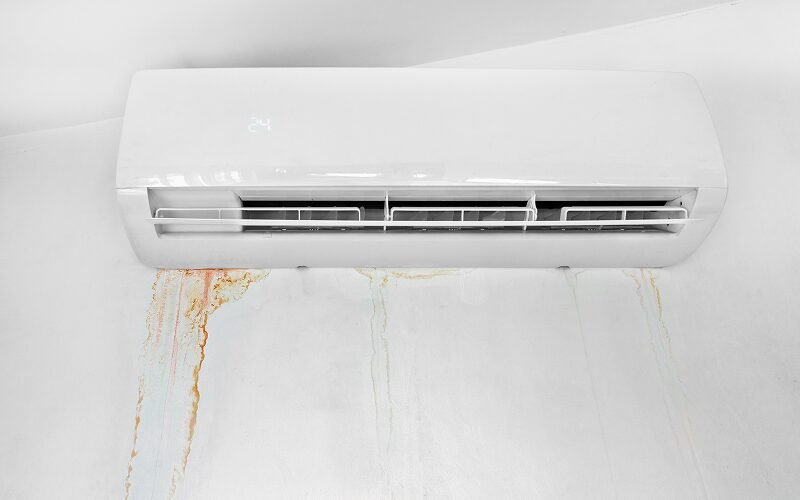
Air conditioners produce condensation during normal cooling, but this water should drain away through the system. Signs of a leak include dripping from the indoor unit, damp wall patches, peeling paint, ceiling stains, or moisture collecting below the aircon.
The leak may appear only after the unit has been running for some time, so it can be easy to miss at first. Any repeated dripping or visible water around the unit should be checked promptly.
Common Causes of Aircon Water Leakage
A Blocked Drainage System
One of the most common causes of an aircon water leak is a clogged drain pipe.
As the air conditioner removes moisture from indoor air, condensation collects in the drain tray and flows out through the drainage pipe. Over time, dust, slime, and debris can narrow or block this pathway. When the water can no longer drain away properly, it backs up inside the unit and eventually overflows.
Homeowners may first notice intermittent dripping during longer cooling periods. As the blockage worsens, the leakage may become more frequent and produce larger amounts of water.
Dirty Filters and Restricted Airflow
Dirty air filters can also contribute to leakage by reducing the amount of warm air passing through the unit.
When airflow becomes too weak, the evaporator coil may become excessively cold. Moisture on the coil can then freeze instead of draining away normally. Once the ice melts, the drainage tray may receive more water than it can manage, causing an aircon water leak.
This is why leakage sometimes appears together with ice buildup, weak airflow, or reduced cooling performance.
Dirt Inside the Cooling System
Dust does not only collect on the visible filter. It may also accumulate on the evaporator coil, blower wheel, drain tray, and other internal parts.
This buildup can disrupt airflow, affect condensation drainage, and create uneven water flow inside the system. In some cases, dirt mixes with moisture to form a sticky residue that contributes to drainage problems.
A surface-level filter cleaning may not be enough when the blockage or dirt sits deeper inside the unit.
Improper Installation
An air conditioner must be installed at the correct angle so condensation can flow towards the drainage outlet.
If the indoor unit, drain tray, or drainage pipe is not positioned correctly, water may collect in the wrong area instead of moving out of the system. Poor pipe routing, inadequate slope, or loose drainage connections can also cause repeated leakage.
Damaged Drainage Components
Drain trays, pipes, joints, and insulation materials can crack, loosen, or deteriorate over time.
A damaged tray may allow water to escape before it reaches the drain pipe, while a loose joint can leak whenever condensation passes through it. Deteriorated insulation around refrigerant pipes may also lead to surface condensation that appears like an aircon water leak.
What Can Happen If the Leakage Is Ignored?
Property Damage
Even a slow leak can stain walls, peel paint, damage ceilings, warp furniture, or affect flooring over time. Hidden leakage above a false ceiling may only become visible once marks or sagging appear.
Reduced Aircon Performance
If the leak is linked to restricted airflow or freezing, the unit may take longer to cool and run for extended periods. This can increase electricity use and place more strain on internal components.
Musty Indoor Conditions
Trapped moisture can create stale smells and damp conditions around the unit. If left unresolved, a minor leak may develop into a larger maintenance or repair issue such as mould.
What to Do If Your Aircon Is Leaking
If you notice water dripping from the aircon unit, switch it off to stop further condensation from building up. Place a container, towel, or protective covering beneath the affected area to reduce damage to walls, flooring, furniture, or electrical fittings nearby.
Avoid opening the casing, scraping internal parts, or trying to clear the drainage pipe yourself. Air conditioners contain electrical components and delicate fittings that can be damaged through improper handling. Arrange a professional inspection to identify whether the leak is caused by a blockage, restricted airflow, a damaged drainage component, or an installation issue.
How Heng Aircon Services Helps Prevent Recurring Leaks
Regular professional servicing can help prevent leaks by keeping drainage paths clear, maintaining proper airflow, and identifying early signs of freezing or component wear before water begins escaping from the unit.
At Heng Aircon Services, we look beyond the visible drip to determine why condensation is not draining correctly. Our technicians check the drain tray, drainage pipe, airflow, coil condition, pipe slope, and internal fittings to identify whether the issue is caused by a blockage, restricted airflow, wear, or installation problems.
This targeted approach helps reduce temporary fixes that allow the leak to return. Our aircon servicing packages also support scheduled drainage checks and cleaning, making it easier to catch dirt buildup and small faults before they develop into recurring leakage.
Conclusion
Aircon water leakage is rarely just a surface issue. It often points to a blocked drain, restricted airflow, a damaged component, or an installation problem that needs to be addressed at the source.
Acting early can help prevent water damage, weaker cooling, and repeated disruption. Regular aircon servicing also reduces the risk of future leaks by keeping drainage paths clear, supporting proper airflow, and identifying small faults before they worsen.
Heng Aircon Services checks the full drainage and cooling system to determine why the leak is happening and recommend the right solution. Contact us today to arrange servicing or troubleshooting for your home or business.